Museums, galleries, mountain trails, a Saturday market and a plan for one, two or three days in the valley.
The things to do in Franschhoek go well past the tasting room, and many of them sit within a few minutes' walk of Huguenot Street.
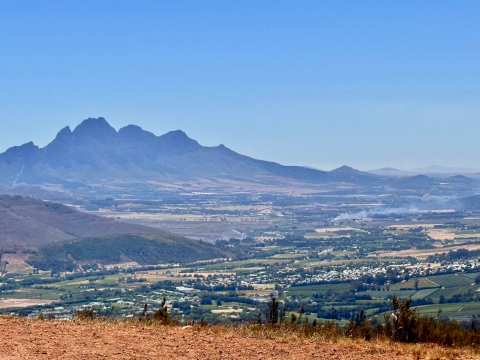
French Huguenots arrived in this valley in 1688, and the village still tells that story through a museum, a monument and a main street of galleries, shops and cafés. Beyond the village, a mountain reserve, a farm trail and a handful of galleries fill out two or three days without much driving. Wine has its own home at Winetrail, which covers the wine farms of Franschhoek, so this guide sticks to everything else.
Sponsored
How many days to give Franschhoek
Two full days covers the village plus one or two outings, and three days adds the farm trails and Simondium. One day is enough for Huguenot Street, the museum precinct and a long lunch.
Beyond a day, you will want a car, a bike or a guide for the outings below.
The month matters: June to August is the wet season and January and February run hot. Check Franschhoek weather month by month before you commit to dates. Two annual festivals also shape the calendar: the Bastille Festival each July, which has run since 1994, and the Huguenot Festival on the last weekend of October.
Franschhoek is about 75 km from Cape Town, roughly 45 minutes by road, so a day trip works. The village rewards a night or two, though, and the places to stay in Franschhoek run from guesthouses on Huguenot Street to farms up the valley.
A short history of the valley
Franschhoek is Afrikaans for French Corner, and the name goes back to the French Huguenots who fled religious persecution after Louis XIV banned Protestantism in 1685. Almost 300 of them reached the Cape by ship in 1688 and were given land in the valley, then known as Olifantshoek, or Elephant's Corner.
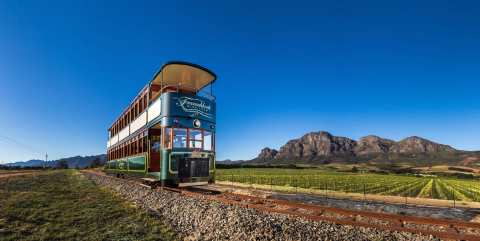
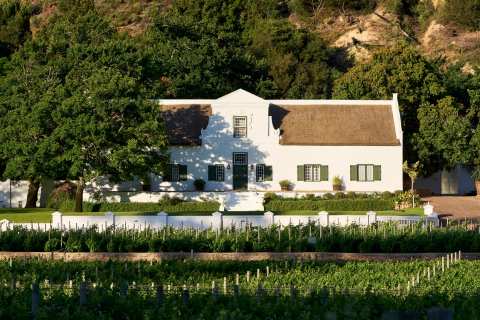
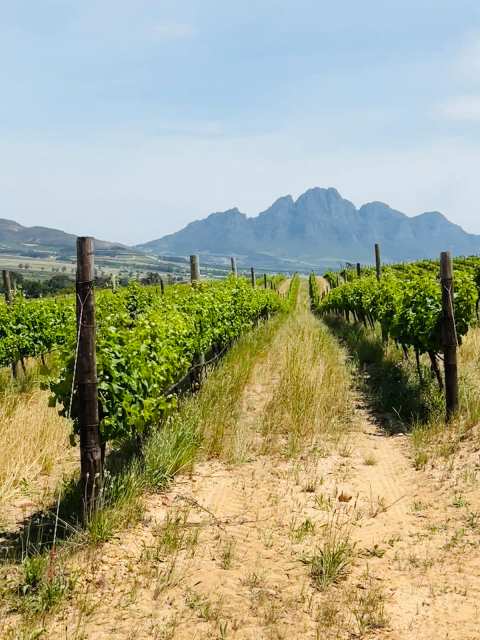
The farms they planted are still the backbone of the valley, and many of the Cape Dutch farmhouses that followed remain among the vineyards. A 28 km branch railway linking Paarl and Franschhoek opened in 1904, and the line was brought back in 2012 as a tourism project, which is how the wine tram came about.
You can read the story in a morning at the museum precinct, but it also shows up in street names, church spires and the names on the farm gates, which is why a slow walk through the village on arrival pays off.
Walk Huguenot Street first
Start on foot. The museum, the market, the shops and the village restaurants all sit within about a kilometre of the tourist office, and a car just gets in the way.
Franschhoek Tourism handles maps and local information from a temporary pop-up at the Franschhoek Wine Trams Info Kiosk in Franschhoek Square, open weekdays 8am to 5pm and weekends 9am to 3pm. Check the listing for current hours before you go. From there, the Huguenot Memorial Museum is about 900 m away in a straight line, and the Saturday market is a few steps from the kiosk.
Lunch and dinner are covered in where to eat in Franschhoek, so this guide leaves the menus alone. The shops and cafés on the way are worth a slow pass, starting with Terbodore Café for a coffee stop.
Kitchenware at Spilsbury's Kitchen and locally made gifts at The Franschhoek Shop fill in the rest of the strip.
Coffee and lunch stops between sights
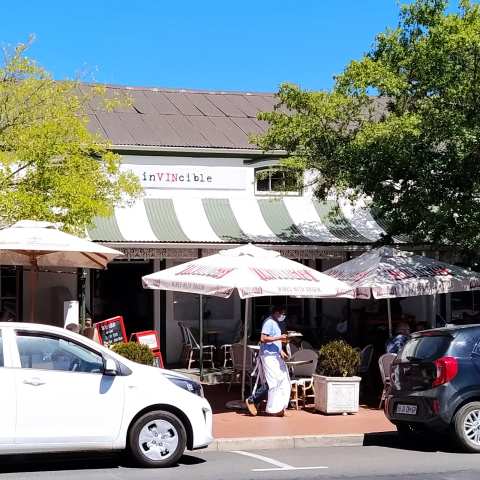
A day of sightseeing in Franschhoek runs on coffee, and the village has plenty of stops that do not need a booking. Bootlegger Franschhoek serves specialty-grade coffee, all-day breakfast, brunch and lunch, with outdoor tables under trees along Huguenot Street.
Motherdough Franschhoek is a bakery on the corner of Main Road and De Wet Street. Hey Joe Brewing Company is a brewpub with beer tasting and a menu of mussels and burgers, set among its own brewing equipment.
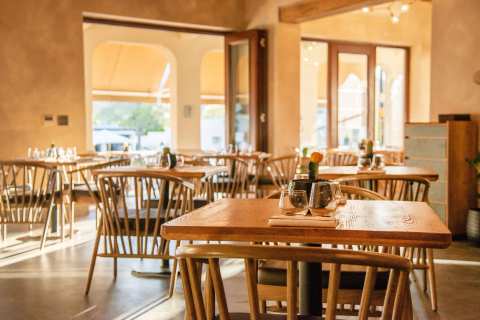
For sit-down meals, book ahead at weekends and in the school holidays, and keep the list of estate restaurants in Franschhoek restaurants handy for a splurge.
History and museums
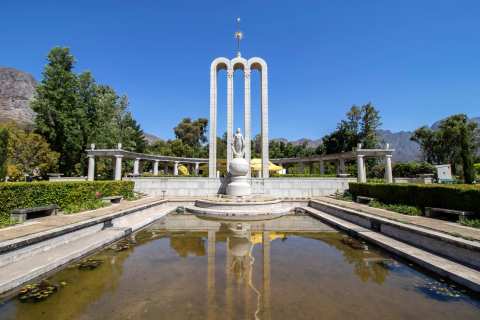
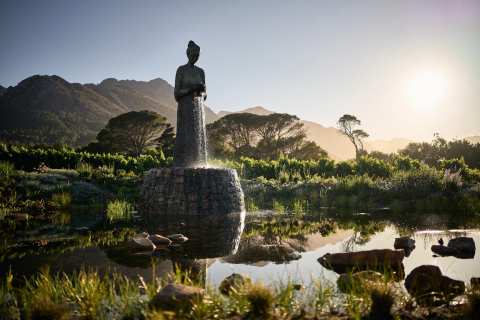
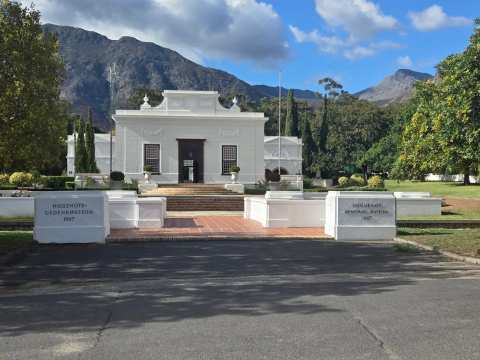
Start the history at the Huguenot Memorial Museum, at the far end of Huguenot Street beside the monument. It portrays the story of the French Huguenots who came to the Cape at the end of the seventeenth century.
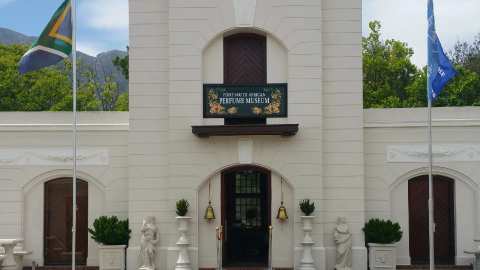
The same precinct holds the perfume museum, which keeps a permanent collection of antique pieces and runs workshops where you can blend a custom fragrance.
If you want the background before you walk down, read up on the Huguenot Monument and the French story behind the valley.
Car people can drive out to the Franschhoek Motor Museum in Simondium, about 12 km west of the village in a straight line. Its galleries hold antique and vintage cars and classic motorcycles.
Art and galleries
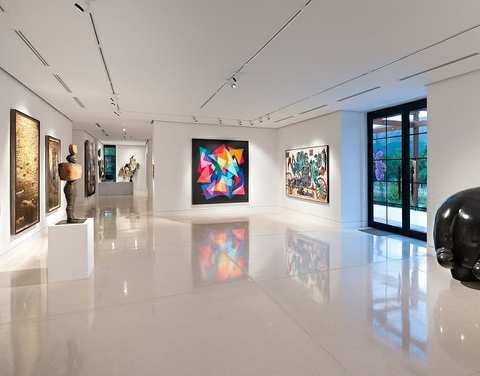
Two galleries are worth the trip out of the village, both about 2 km from Huguenot Street. Everard Read at Leeu Estates and The Gallery at Grande Provence sit on wine estates, which Winetrail covers in its guide to the Franschhoek winelands.
The Gallery at Grande Provence shows contemporary fine art in several media by emerging and established South African artists. It has an indoor exhibition space, an outdoor sculpture garden and a shop for smaller pieces and African artefacts.
Outdoors: mountain reserve, farm trail and bike rides
For a proper walk, choose between the Mont Rochelle Nature Reserve above the village, the La Motte Hiking Trail and the closer green space at Patrysfontein. Each suits a different mood, and all three are quick to reach.
The road itself has a long story, from a rough track cut in 1819 to an engineered road in the 1820s, and it is worth understanding before you drive the Franschhoek Pass.
Closer in, Patrysfontein on Van Riebeeck Street is under a kilometre from Huguenot Street, a green space for a short walk. Bikes 'n Wines Franschhoek runs guided rides on standard bikes or e-bikes along vineyard paths and historic farmland, with routes for different fitness levels.
Over in Simondium, about 18 km from the village, Cape Winelands Riding offers guided horse rides, from 1.5-hour tours to sunset rides, for beginners and experienced riders.
The Franschhoek Pass Lookout Point has allocated pull-off areas and parking near the top of the road, with open views across the mountains and down the valley. The pass is closed to traffic at the moment, so keep it for when the road reopens.
Franschhoek by season
Summer suits early starts and late afternoons, because January and February are the hottest months, with mean daily highs of about 29 to 30°C. Do the market, the galleries and the museum before lunch, then spend the heat of the day by a pool and head out again when it cools.
Autumn and spring are the easy seasons for walking. April averages a high of 24°C and a low of 13°C, and October a high of 22°C and a low of 11°C. That is the weather for the La Motte trail, the reserve and a bike ride.
Winter is the quiet season, with July averaging a high of 18°C and a low of 8°C. Rain peaks from June to August, so plan on the museum, the galleries, a cooking class and long lunches, and pack a proper jacket for the walk between them.
With children
Families do best with the Saturday market, a chocolate workshop, a run around Patrysfontein and a visit to the rescued farm animals at Farm Sanctuary SA.
The market and the chocolate workshop below both work for children, and the museum precinct suits older ones who like a story.
Markets, chocolate and shopping
The Franschhoek Village Market runs on Saturdays from 10am to 3pm, weather permitting.
Chocolate gets its own stop in the village.
Spilsbury's Kitchen is a homeware shop that turns into a cooking studio, where guests cook South African dishes from starter to dessert. The Franschhoek Shop sells handmade ceramics, baubles, wildlife décor and clothing inspired by the area, including the Feathers of Knysna bird collection and ORGARI vases.
What to do in Franschhoek when it rains
When it rains, head indoors: the museum precinct, a cooking class, a gallery, a Pilates session or the motor museum.
June to August is the wettest stretch, so keep this list handy for winter visits.
Pilates Franschhoek offers mat classes and private or semi-private reformer sessions. For a swim or a gym session there is Franschhoek Health Club, with a gym and a two-lane pool.
A long lunch is the other classic wet-day plan, and the village restaurants range from bistros to estate dining rooms.
Getting around without a car
The village is walkable. For the farms and estates, the wine tram, a tuk tuk or a guided tour does the driving.
The Franschhoek Wine Tram runs five hop-on hop-off lines using trams and tram-buses, and the estates on each line are laid out in the Winetrail guide to Franschhoek wine tram routes.
Tuk Tuk Franschhoek runs shuttle services within the valley plus Cape Town and airport transfers. La Rochelle Tours is a family-run operator founded in 2000, with guided excursions across Franschhoek, Stellenbosch and Paarl and private pick-ups from Cape Town.
Community and conservation stops
Arc of Franschhoek is an eco-tourism hub at the Berg River Dam focused on regenerative tourism, about 5 km south-west of the village. Tomorrowland Music & Arts Centre in Langrug supports children and runs training and employment programmes, and its listing explains how to get involved.
What to book and what to turn up for
Much of the village needs no planning: you can walk into the museum precinct, browse the shops and sit down for coffee whenever you arrive. Everard Read is closed on Mondays and the village market runs on Saturdays, so build those two around the calendar. Workshops are the things to book: the chocolate slab session, a cooking class at Spilsbury's Kitchen and a reformer Pilates class all need a time slot, and guided rides and bike tours run to a schedule.
Restaurants are the other booking, and the better ones fill up at weekends and in school holidays. Book dinner when you book the room, and leave lunch loose so a slow morning does not wreck the plan.
A one, two and three-day plan
One day
Pick up a map at the tourist office, then walk to the Huguenot Memorial Museum and the perfume museum next door for the morning. Eat lunch on Huguenot Street, spend the early afternoon on a chocolate workshop or a browse through the shops, and finish with a drink and dinner in the village. That is a full day without once starting the car.
Two days
Keep day one as it is. On day two, walk the La Motte Hiking Trail or the Mont Rochelle Nature Reserve in the morning while the air is cool, and have a late lunch near the trailhead. After lunch, visit Everard Read and The Gallery at Grande Provence, which are less than a kilometre apart. On a Saturday, swap the morning walk for the market and do the trail on Sunday.
Three days
Add a day out of the village. Drive to Simondium for the motor museum or a horse ride, take a guided bike tour through the vineyards, or visit the Arc and the Berg River Dam to see what regenerative tourism looks like in practice. Leave the last afternoon free for the pool, a Pilates class or one more slow lunch.
If the trip is a wedding, the choice of wedding venues in Franschhoek runs from chapels to barns and vineyard lawns.
Frequently asked questions
Published October 5, 2026