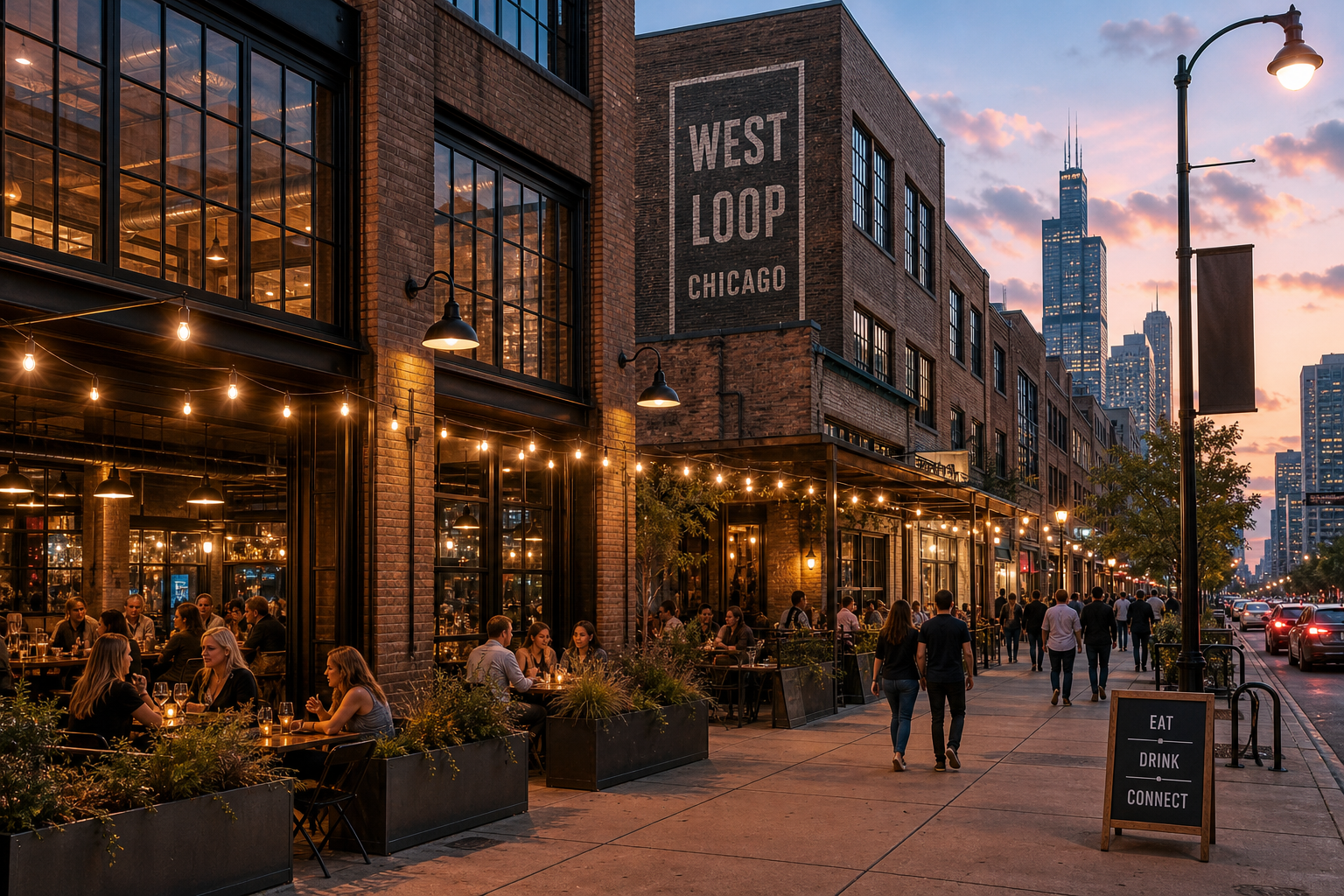
Within a few blocks of each other, the West Loop holds walk-in burger counters, authentic ramen, and multiple Michelin-recognized tasting menus: few neighborhoods anywhere make that range so walkable.
Plan your West Loop dining trip the right way
Discover the West Loop's best tables and plan your visit with the Local Eyes neighborhood guide.
Two streets account for most of the best eating
Nearly everything worth seeking out in the West Loop sits on one of two streets: Randolph Street (Restaurant Row) or Fulton Market. Randolph is the longer of the two corridors and holds more Michelin award-winners than any other stretch in the city. Fulton Market, the former meatpacking district just north, carries a cool industrial character where converted warehouse buildings now house a dense run of restaurants and bars. Understanding this geography before you arrive saves real time. The two streets are close enough to walk between, but each has a distinct feel: Randolph skews toward destination dining and tasting menus, while Fulton Market mixes high-concept spots with livelier, more casual options.
How the neighborhood became a dining destination
The West Loop spent most of the twentieth century as a working meatpacking and food-distribution district. The transformation began in the late 1980s and picked up pace through the 1990s and 2000s, when artists and chefs moved into the affordable warehouse spaces and former industrial buildings were converted into lofts, galleries, and restaurants. Girl & the Goat, which opened in 2010, is often cited as one of the first restaurants to anchor Randolph Street's Restaurant Row identity. Grant Achatz later brought a trio of concepts to Fulton Market: Next, The Aviary, and The Office, with Next earning a Michelin star in 2020). The neighborhood now has more restaurants run by former Top Chef contestants than any other area in Chicago, with eight operating within two blocks of each other.
The range of cuisines and formats is genuinely wide
Within a three or four block radius, a diner can move from a casual taqueria to a wood-fired concept to a multi-course tasting menu restaurant. The West Loop is particularly strong in innovative American cooking, Mediterranean food, and Japanese cuisine, including authentic ramen from Hokkaido Ramen Santouka. Au Chevel has earned the title of best burger in Chicago and regularly draws waits of at least two and a half hours, so timing matters. Greektown on Halsted Street and the blocks near the United Center add further variety at the neighborhood's edges. The practical upshot: whatever format or price point you are looking for, the West Loop almost certainly has it within walking distance.
Reservations, timing, and getting there without frustration
Popular spots on Restaurant Row and Fulton Market book up well in advance, sometimes weeks out for weekend evenings. Booking as early as possible is the single most useful thing a first-time visitor can do. For restaurants that do not take reservations, such as Au Chevel, arriving at an off-peak time is the standard local strategy. The neighborhood is accessible by the CTA Green and Pink lines, and several bus routes run along Randolph and Madison. Parking exists but is genuinely limited on weekend nights, so transit or a rideshare is the more reliable option. If you are planning a private event or a larger group dinner, many West Loop venues have dedicated private dining rooms that require separate inquiry and lead time. For a comparable approach to navigating another city's dining corridors, the guide to downtown Orlando restaurants applies similar logic to a different neighborhood.
How to plan a West Loop dining visit
- 1
Decide which street fits your mood
Start by choosing between Randolph Street and Fulton Market. Randolph suits diners looking for destination tasting menus, acclaimed chef-driven spots, and the highest concentration of Michelin recognition. Fulton Market suits those who want a livelier, more mixed atmosphere with both upscale and casual options side by side. Knowing this before you search saves you from booking somewhere that does not match what you actually want.
- 2
Lock in reservations early
For any restaurant on Restaurant Row that takes reservations, book as far ahead as your plans allow. Weekend dinner slots at the most sought-after spots fill quickly, and same-day availability is rare. Use OpenTable or the restaurant's own booking system. If you are flexible on timing, weekday evenings and early seatings tend to have more availability than Friday and Saturday prime time.
- 3
Build in a no-reservation backup
Not every great West Loop meal requires a reservation. Several well-regarded spots operate on a walk-in basis, and the trade-off is a wait rather than advance planning. Arriving before peak hours (before noon for lunch, before 6 pm for dinner) is the most reliable way to keep that wait manageable. Having a second option in mind means a long line at your first choice does not derail the evening.
- 4
Plan your transit or parking before you go
The CTA Green and Pink lines put you within walking distance of both main dining corridors. If you are driving, street parking tightens considerably on weekend nights, and garage options fill early. Deciding on transit or a rideshare before you leave removes one of the most common sources of frustration for first-time visitors to the neighborhood.
- 5
Explore beyond the anchor restaurants
Restaurant Row and Fulton Market get most of the attention, but Greektown on Halsted Street and the blocks near the United Center offer solid everyday dining at a range of price points. If you are visiting for a game or event at the United Center, the surrounding blocks have options that work well for a meal before or after. Checking a neighborhood guide like Local Eyes helps surface spots that do not always appear in national press coverage.
Benefits
Michelin density in a small area
Randolph Street holds more Michelin award-winners than any other street in Chicago, meaning a short walk can take you past multiple recognized restaurants in a single evening.
Every format and price point represented
Within a few blocks, the West Loop offers everything from no-reservation burger counters to multi-course tasting menus, so a single neighborhood handles both casual and celebratory meals without requiring a cross-city trip.
Strong chef pedigree throughout
The area has more restaurants run by former Top Chef contestants than any other Chicago neighborhood, with eight operating within two blocks of each other, which gives the broader dining scene an unusually high floor of quality.
Walkable between the two main corridors
Randolph Street and Fulton Market are close enough to walk between, so a visitor can move from a casual lunch spot to a dinner reservation without needing transit or a car in between.
Dining situations the West Loop handles well
A special-occasion dinner for two
The West Loop is one of the strongest neighborhoods in Chicago for a celebratory dinner. Restaurant Row holds multiple Michelin-recognized spots with tasting menus, and the industrial-chic settings of converted warehouse buildings add atmosphere that is hard to replicate elsewhere. Booking several weeks in advance is realistic for the most sought-after tables. For a similarly curated approach to another city's dining scene, the Lafayette restaurant guide shows how local knowledge shapes a special-occasion meal.
A casual lunch between meetings or sightseeing
The neighborhood's density means a satisfying lunch does not require a reservation or a long walk. Ramen, tacos, burgers, and coffee are all within the same few blocks as the fine dining corridor. Au Chevel's burger is the area's most discussed casual option, though the wait means it suits a leisurely visit more than a tight schedule. Arriving just before the lunch rush opens is the practical move.
A group dinner with varied tastes
Fulton Market and Randolph Street together offer enough variety that a group with different cuisine preferences can usually find one restaurant that works for everyone, or can split across two spots on the same block. Larger groups should contact venues directly about private dining options, as several West Loop restaurants have dedicated rooms for parties. Lead time matters here as much as it does for individual reservations.
Exploring the neighborhood over a full day
The West Loop rewards a slower visit. Starting with coffee and a morning walk through Fulton Market, moving to a casual lunch on Randolph, and returning for dinner at a tasting menu restaurant is a format that locals and well-prepared visitors use regularly. The two main corridors are walkable from each other, so a full day of eating does not require a car. Pairing a dining itinerary with a look at the neighborhood's wine and drink options rounds out the visit.
West Loop restaurants: common questions answered
Find your next West Loop table with local guidance
The West Loop's dining scene rewards preparation: knowing which street fits your mood, booking early, and having a walk-in backup ready. Browse the Local Eyes neighborhood guide to find specific restaurants, read local recommendations, and plan a visit that matches what you are actually looking for.