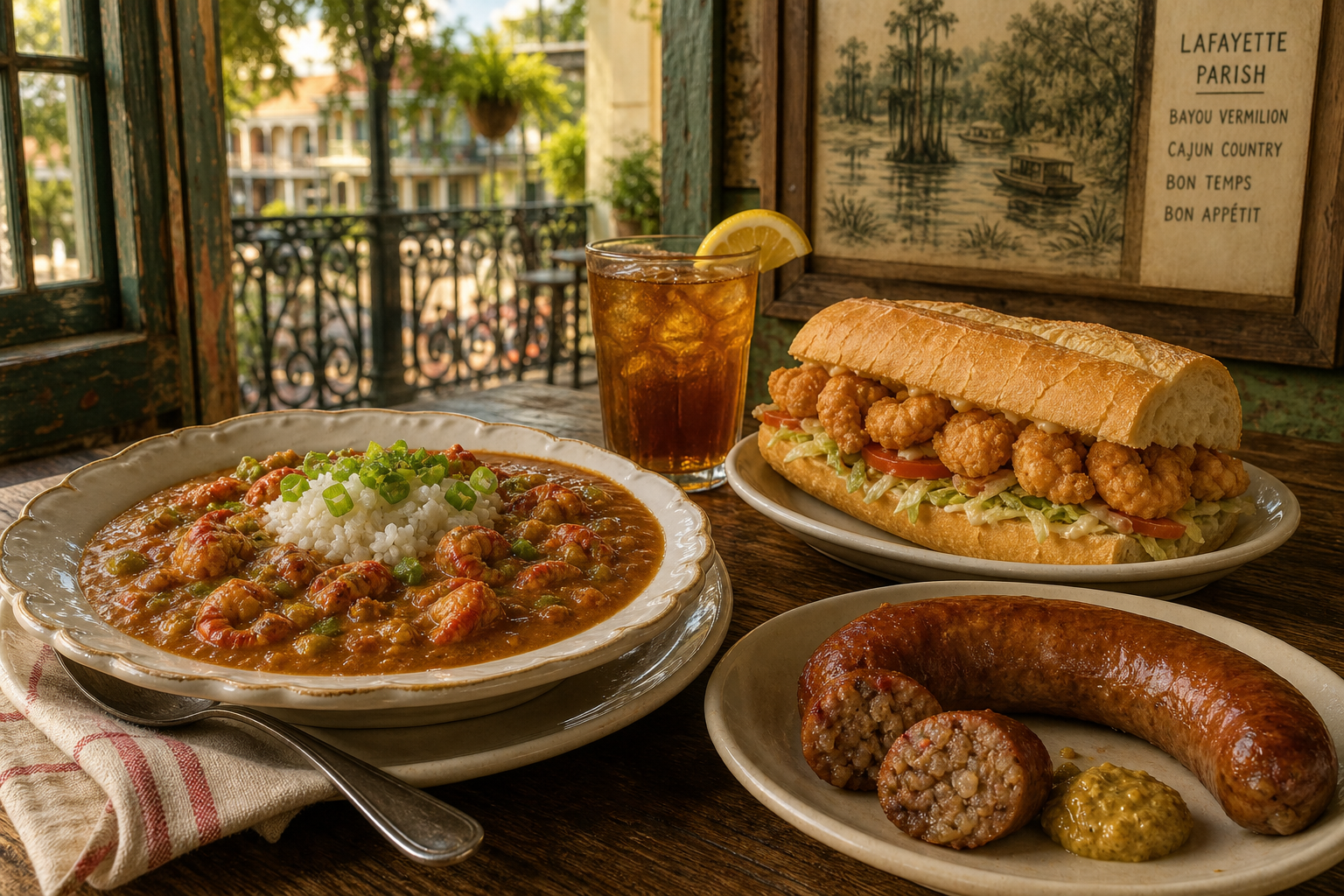
The best meals in Lafayette come from family kitchens that have been making the same dishes for decades, not from menus designed for visitors.
Find your next great meal in Lafayette
Explore Lafayette's dining scene and find the restaurants locals actually recommend.
Why Lafayette's food culture runs deeper than the menu
Lafayette sits at the heart of Acadiana, and its restaurant scene is a direct expression of that identity. Cajun food historically developed as simple, country-style cooking, distinct from the more elaborate Creole cuisine of New Orleans, and that unpretentious spirit still shapes how and where people eat here. Family-owned restaurants far outnumber chains, and the range spans Cuban, Mexican, Greek, Italian, Southern, and of course Cajun and Creole. With more than 180 Creole food restaurants in Lafayette, the city offers genuine depth, not just a handful of tourist-facing spots. Knowing what you are looking for before you sit down makes the whole experience sharper.
The dishes every first-time visitor should know
A few dishes define the Lafayette table and appear across nearly every price point. Crawfish étouffée smothers crawfish tails in a butter-and-roux sauce built on onions, celery, bell peppers, garlic, and Cajun spices. The word étouffée means "smothered," and the technique is central to the cuisine. Boudin is the city's signature sausage, a blend of pork and rice whose exact seasoning varies by family tradition and shop. Gumbo, jambalaya (a rice dish with Spanish and French roots, typically built on andouille sausage), and the Po'Boy, stuffed with fried shrimp, crawfish, oysters, or fish, round out the essentials. Plate lunches anchored by red beans and rice, fried pork chops, or slow-smothered rice and gravy are the everyday rhythm of the local lunch hour.
Navigating Lafayette by neighborhood
Where you are in the city shapes your options considerably. Downtown Lafayette clusters upscale dinner spots and casual lunch counters near the Acadiana Center for the Arts and the Lafayette Science Museum, making it a natural starting point for visitors. The Oil Center, a district that took shape in the 1950s as oil companies moved into offices between Heymann Boulevard and Pinhook Road, now hosts a mix of established restaurants with a professional lunch crowd. The Kaliste Saloom corridor connects older sections of the city with newer development to the south and carries a wider range of cuisines and price points. Knowing which corridor you are in helps you match ambiance and cuisine to the meal you actually want.
Long-running restaurants worth seeking out
Longevity in Lafayette's restaurant scene is a meaningful signal. Don's Seafood Cajun Restaurant and Oyster Bar has been operating since 1934, making it one of the oldest continuously running seafood houses in the state. Prejean's Restaurant has focused on authentic Cajun food and a welcoming dining room for more than 40 years, serving breakfast, lunch, and dinner. Dwight's Restaurant has been an Acadiana tradition since 1988, known for hearty plate lunches, Sunday barbecue, and seasonal boiled crawfish. Creole lunch houses are a separate institution entirely: long-standing neighborhood spots built around daily plate lunches of Creole and soul food, often changing their menu with what is fresh and available that day.
Seafood sourcing and what to ask about
Gulf seafood is the backbone of Lafayette's restaurant menus, and quality varies. Some restaurants now source farm-raised, off-the-bottom Gulf oysters as a sustainable alternative to wild harvests, a distinction worth asking about if oysters are on your list. Crawfish season shapes what is available and how it is served: during peak season, boiled crawfish by the pound appears at casual spots across the city, while étouffée and bisques are year-round staples that use frozen or farm-raised tails. Fried catfish, a Southern comfort staple, rounds out the seafood picture and shows up on both lunch counter menus and full-service dinner menus. Asking your server what is fresh or in season is always a reasonable question in Lafayette.
How to plan a great meal in Lafayette
- 1
Decide on your meal format first
Lafayette's dining scene divides roughly into plate lunch counters, casual sit-down restaurants, and upscale dinner spots. Plate lunches are the local midday institution: a main, two or three sides, and often a drink, served fast and priced for everyday eating. Dinner service at full-service restaurants tends to be more relaxed and menu-driven. Knowing which format fits your schedule and appetite narrows the field quickly.
- 2
Pick a neighborhood that matches your plans
Downtown Lafayette suits visitors who are already near the arts district or museum and want something within walking distance. The Oil Center draws a professional lunch crowd and has reliable mid-range options. The Kaliste Saloom corridor offers the broadest range of cuisines and is a good default if you are driving. Matching your neighborhood to your itinerary saves time and often surfaces better options than searching the whole city at once.
- 3
Learn the key dishes before you order
Even a basic familiarity with étouffée, boudin, gumbo, and jambalaya helps you read a Lafayette menu with confidence. Boudin in particular varies significantly between shops and restaurants: some serve it in the casing, others remove it. Ask how it is prepared if you are unsure. Knowing that jambalaya is a rice-based dish with meat and vegetables, while gumbo is a roux-thickened stew, helps you choose between them when both appear on the same menu.
- 4
Check whether the restaurant is family-owned
Lafayette's best meals tend to come from family-owned kitchens rather than chains. These restaurants often have shorter menus, more consistent quality, and cooks who have been making the same dishes for decades. Long-operating restaurants like those that have run for 40 or more years are a reliable indicator of community trust. Reviews on local platforms and word of mouth from residents are more useful signals here than national rankings.
- 5
Ask about seasonal availability
Crawfish season is the clearest example: boiled crawfish by the pound appears at casual spots across the city during peak season but disappears when the season ends. Oysters, Gulf fish, and even specific cuts of meat can follow similar rhythms. A quick question to your server about what is fresh or what the kitchen is proud of that day often leads to a better meal than defaulting to the most familiar item on the menu.
Benefits
A cuisine rooted in local identity
Lafayette's food is not a performance of Southern cooking for visitors. Cajun and Creole traditions here developed from Acadiana's own history, and the dishes served in family-owned restaurants reflect generations of local practice, not a standardized menu.
Genuine variety beyond Cajun food
The city's family-owned restaurant landscape spans Cuban, Mexican, Greek, Italian, and Southern cuisines alongside its Cajun and Creole core. More than 180 Creole food restaurants operate in Lafayette, and the broader dining scene adds significant range on top of that.
Restaurants with real longevity
Several of Lafayette's most respected restaurants have operated for decades, with the oldest going back to 1934. Long tenure in a competitive food city is a meaningful signal of consistent quality and community trust.
Neighborhood clusters that simplify choices
Downtown, the Oil Center, and the Kaliste Saloom corridor each carry a distinct mix of restaurants and price points. Knowing which part of the city you are in makes it easier to find the right meal without searching the entire metro area.
Lafayette dining situations worth planning for
A visitor eating in Lafayette for the first time
A traveler with one or two meals to spend in Lafayette should prioritize the dishes that exist nowhere else quite the same way: boudin from a local shop, crawfish étouffée at a sit-down restaurant, and a Po'Boy from a counter that makes its own bread. Starting with a Creole lunch house gives an immediate sense of the everyday food culture before moving to a more curated dinner experience. Downtown or the Oil Center are the most convenient starting points for visitors staying near the city center.
A local looking beyond their usual rotation
Lafayette's restaurant scene includes cuisines well outside the Cajun and Creole core, from Cuban and Mexican to Greek and Italian, most of them family-owned. A resident who has settled into a handful of familiar spots may not realize how much variety exists along the Kaliste Saloom corridor or in newer parts of the city. Checking what is new or recently opened in a specific neighborhood is a practical way to expand without wandering aimlessly.
A group with mixed dietary preferences
Cajun and Creole menus are heavily meat- and seafood-forward, which can complicate group dining when preferences vary. The city's family-owned restaurants that draw from Italian, Greek, or Southern traditions tend to offer more flexibility. Restaurants with broader menus that include vegetable-forward sides, like black-eyed peas, cornbread, and rice-based dishes, give mixed groups more to work with. Calling ahead to ask about accommodations is always worthwhile at smaller, family-run spots.
Planning a weekend trip around food
Lafayette rewards a deliberate food itinerary: a boudin stop in the morning, a plate lunch at a Creole lunch house at midday, and a full Cajun or seafood dinner in the evening covers the full range of what the city does well. Timing a visit to crawfish season adds the option of a casual boiled crawfish gathering, which is as much a social event as a meal in Acadiana. Checking local event listings for food festivals or pop-ups can layer additional experiences onto a weekend trip.
Common questions about eating in Lafayette
Find the Lafayette restaurants locals actually recommend
Lafayette's restaurant scene rewards a little local knowledge, and the best meals here rarely come from guessing. Browse the Local Eyes Lafayette guide to find restaurants, read what locals say, and plan a meal worth the trip.