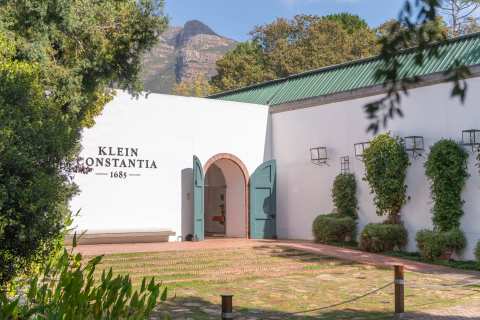
How many days the Franschhoek winelands need, how to get around without a car, and which farms sit where from the village to Simondium.
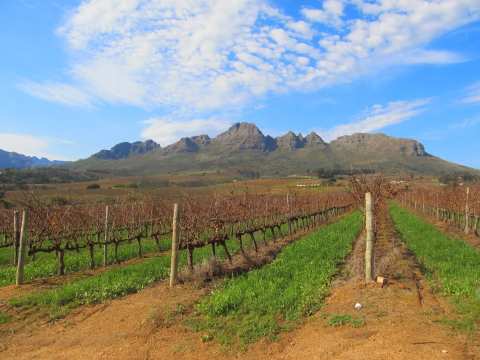
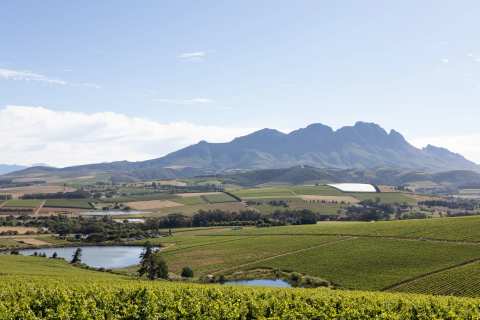
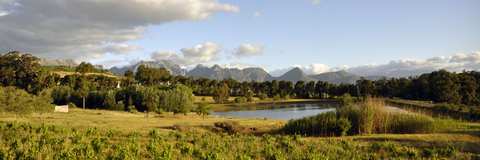
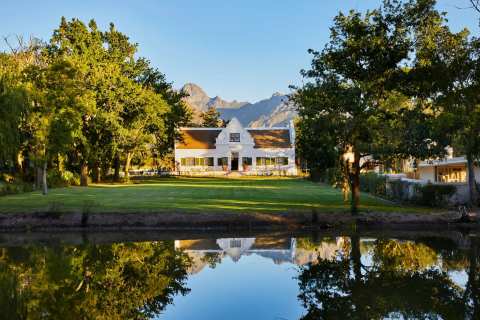
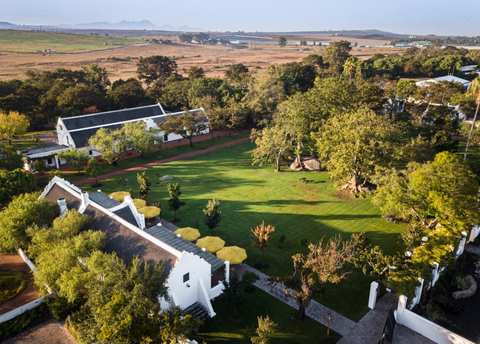
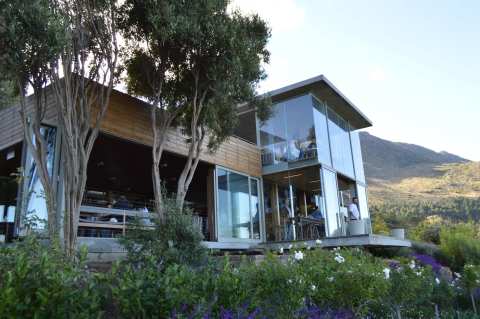
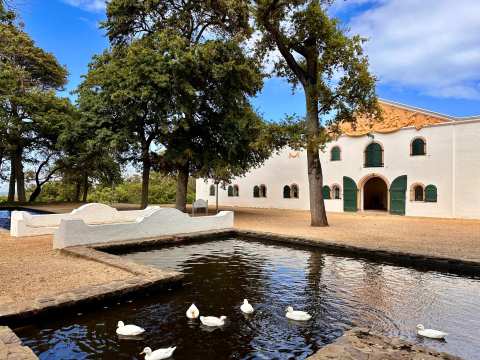
The Franschhoek winelands fill a mountain-ringed valley about 64 km east of Cape Town in a straight line, and the farms run from the village centre out to Simondium at the valley's western end. This guide covers how many days to give them, how to get around, which farms sit where, and where to eat and stay. Every distance is straight-line, so allow extra time for the road. Distances to the village are measured from the village centre.
It is a small valley with a long history. French Huguenot refugees reached the Cape in 1688. In the 1690s farms were allocated to the settlers, and the valley later became known as Franschhoek, Dutch for French corner.
Sponsored
Some farms still carry French names. La Motte is one, and Chamonix is another, renamed after a French alpine village in 1965.
The valley became a Wine of Origin district of its own in 2010, after decades as a ward of Paarl. A farm-by-farm list sits under every wine farm in the valley, so this page stays with the bigger questions: how long to stay, how to move around and which end of the valley to start from.
How many days the Franschhoek winelands need
Count the days by the distances, not by the number of farms. The village end sits within about 2 km of the main street, the middle of the valley sits about two to five kilometres out, Anthonij Rupert is about 9 km west, and the Simondium farms are mainly 14 to 20 km west. Each day below keeps to one stretch, so you spend your time at the tasting room instead of on the road.
One day: the village and the middle valley
With one day, stay within five kilometres of the village centre. Start with a late-morning tasting at Haute Cabrière, 1.8 km east. Rickety Bridge, about 4.5 km north-west of there in a straight line, makes a second tasting.
Take lunch at Leopard’s Leap, 4.3 km north-west of the village centre. Two tastings and a lunch leave time to walk the village streets before dinner. Ask each farm for its opening days before you set out, because tasting rooms close on different days.
A weekend: choose the second day
With two days, spend the second one either in the middle valley, as in the sample weekend below, or at the western end. For the western end, the Cellar Door at Boschendal is 13.9 km west of the village centre and Babylonstoren is 20.0 km north-west, with about 7.9 km between the two in a straight line. The road between them is longer, so treat that transfer as the cost of the day, and plan to taste at two farms there and eat at one of them.
Three days: La Motte, Anthonij Rupert and the mountain
A third day lets you slow down. La Motte is 5.0 km north-west of the village centre and Anthonij Rupert about 9 km west of the village centre and 4.5 km beyond La Motte, so the two pair into a half day. Use the rest of the day for a walk in the mountains, or for a long lunch with no driving afterwards.
Mont Rochelle Nature Reserve sits 3.7 km east of the village centre, and its trails are covered further down.
Here are the main stops in one list, ordered by straight-line distance from the village centre, so you can see which farms belong in the same day.
- Franschhoek Cellar: 0.7 km north-west
- Chamonix: 1.3 km north-east
- Haute Cabrière: 1.8 km east
- Grande Provence: 1.8 km north-west
- Rickety Bridge: 2.8 km north-west
- Holden Manz: 3.0 km south
- Boekenhoutskloof: 3.9 km south
- Leopard’s Leap: 4.3 km north-west
- La Motte: 5.0 km north-west
- Anthonij Rupert: 9.2 km west
- Boschendal Cellar Door: 13.9 km west
- Babylonstoren: 20.0 km north-west
Getting around without a car
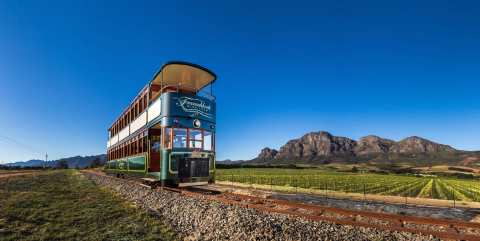
A hop-on service is one way to taste at several farms without driving, and the Franschhoek Wine Tram is the main one.
The operator's home page links a combined timetable PDF, each line page links its own insert, and bookings go through its online system. How to choose between the lines is covered under the Franschhoek wine tram lines, which sets out the five lines, the fare read on 7 November 2026 (confirm it before you book) and how to book; times are in the operator's timetable PDFs.
Guided options start from the village too. La Rochelle Tours is a family-run operator founded in 2000, with qualified guides in Stellenbosch, Franschhoek and Paarl, and it collects private guests in Cape Town on request.
Tuk Tuk Franschhoek runs full-day, half-day and curated wine tours, a hop-on service to selected farms and a guided wine walk.
If you also plan a day in Stellenbosch, tasting fees and booking rules at ten farms are set out under Stellenbosch wine tasting.
The village end: Haute Cabrière, Chamonix and the Cap Classique houses
The nearest farms sit within two kilometres of the main street, which makes them a good opening for a short day. Taste here when you start late, or when you want a tasting room you can reach on foot from the village.
On the north-east side, Chamonix lies 1.3 km from the village centre and offers tastings and a private cellar tour. Dieu Donné is 1.7 km north-east, pours wine with cellar tours and a tasting with the winemaker, and its listing says it is connected to the Pink line of the tram.
La Bri, 1.4 km south, was one of the nine farms granted to the Huguenots who arrived in 1688, according to its own site. It pairs its wines with chocolate, biltong and Turkish delight.
Two sparkling houses sit close to the village centre. Colmant is 1.7 km south-east and focuses entirely on Cap Classique, pouring comparative tastings against imported champagne.
Le Lude is 1.2 km south-east and makes naturally bottle-fermented sparkling wine, with an Orangerie restaurant on the estate. The wider spread of Cape producers is laid out under where to taste Cap Classique.
Colmant is also a young house by the valley's standards. The Colmant family, who are Belgian, arrived in Franschhoek in December 2002, finished the cellar in 2005 and picked their first harvest in 2006, according to a wine reference site. Haute Cabrière, 1.8 km east of the village centre, has a much longer history.
In the village itself, Franschhoek Cellar sits 0.7 km north-west of the centre and offers wine tastings and group wine tours, with lunch dishes planned to pair with its wines.
The Mont Rochelle hotel and winery is 0.8 km south-west of the village centre.
The middle valley and south of the village: Grande Provence, Rickety Bridge and Leopard’s Leap
North-west of the village the road runs along farms that sit close together. The stretch between Grande Provence and La Motte is about three kilometres, so two or three tasting rooms and a long lunch fit into one afternoon.
Grande Provence is 1.8 km north-west of the village centre and 1.0 km from Rickety Bridge. It combines a wine tasting room, an art gallery, a restaurant, The Oak, and boutique accommodation on one estate.
GlenWood Vineyards lies 2.9 km west of the village centre and 2.2 km from Rickety Bridge, so it fits into the same afternoon.
On the same side of the valley, La Motte is 5.0 km north-west. It runs a classical music concert series and a five-kilometre circular hiking trail that begins and ends at the tasting room. The trail is closed from May to September, on Christian public holidays, in rain and above 35 degrees Celsius, so call the tasting room before you go. Like Leopard’s Leap, the farm is cashless, so bring a card.
South of the village, Boekenhoutskloof is 3.9 km from the centre on Excelsior Road, and tastings there are by pre-booking, with a cellar visit and a conversation with the winemaker. Holden Manz is 3.0 km south.
The Simondium end: Boschendal, Babylonstoren and the Rupert estates
West of the village the valley opens out and the farms spread apart. The farms below mainly sit 14 to 20 km from the village, so this end suits a day of its own, and the Paarl wine farms are the next area to look at if you want to carry on west.
Allée Bleue is 13.7 km west of the village centre and, according to its site, dates back to 1690. The site also describes it as the entry point to the Franschhoek Valley. It grows fruit and herbs alongside its wine and sits where the Berg and Dwars rivers meet.
Plaisir, which its listing says was established in 1693, farms decomposed granite soils and also distils a small-batch estate gin. It sits 0.7 km from Vrede en Lust on the slopes of the Simonsberg, 16.4 and 17.0 km from the village centre.
At Vrede en Lust the wine list includes a sparkling wine called Sarah Bubbly, and the tasting room serves lunch. The estate also runs as a wedding venue with on-site accommodation.
Rupert & Rothschild Vignerons is 17.4 km north-west of the village centre. It was established in 1997 through a partnership between Dr Anton Rupert and Baron Edmond de Rothschild, and it concentrates on a focused trio of wines.
This organic estate grower on the Simonsberg slopes is Noble Hill, 1.0 km from Babylonstoren, and it runs the Harvest restaurant. Nearer the village, about 9 km out, two tasting venues sit at Anthonij Rupert, the historic manor house and the modern Terra del Capo room, 9.2 km west of the village centre.
For a horse ride in the winelands, Cape Winelands Riding is 18.4 km north-west of the village centre, and the Garden Spa at Babylonstoren is a separate listing.
A sample weekend in the valley
Here is how the distances above turn into two relaxed days. Check each farm's opening days and booking rule before you commit, because tasting rooms close on different days.
Saturday: the village and its two sides
Start with a morning tasting at Chamonix, 1.3 km north-east of the village centre, and then walk to the village market, which the listing says is open on Saturdays from 10:00 to 15:00, weather permitting. Eat there, then go to Haute Cabrière, 1.8 km east of the centre, for an afternoon tasting. Finish at La Petite Colombe, 1.8 km west of the centre, after checking its current service times, and book well ahead.
Sunday: lunch and a walk
On Sunday, aim for Leopard’s Leap, which serves a carvery on Sundays and sits 4.3 km north-west of the centre. Then go on to La Motte, 5.0 km north-west of the centre, whose five-kilometre circular trail begins and ends at the tasting room but is closed from May to September and in rain. That leaves the afternoon free for a last tasting, or for the drive back to Cape Town, about 64 km away in a straight line.
A different weekend: Simondium on the second day
If you want the Simondium end instead, keep Saturday as above and spend Sunday there. Taste at Boschendal in the morning, move on to Babylonstoren, about 7.9 km away in a straight line, and eat at one of the two farms, so the day holds two farms and one lunch, and no more driving than that.
Which part of the valley for which visit
Pick the end of the valley that matches the trip you want, then stay there. The village end holds the sparkling houses and the Huguenot sites within about 2 km of the main street, the middle valley holds Grande Provence, Rickety Bridge and Leopard’s Leap, and the Simondium end holds Boschendal, Babylonstoren and their neighbours 14 to 20 km west.
For sparkling wine, stay in the village end, where Colmant, Haute Cabrière and Le Lude are all within 1.8 km of the centre.
For history, La Bri, the Huguenot Memorial Museum and the monument are within 1.4 km of the centre.
For children, the pump track and play area at Leopard’s Leap and the children's play area at the village market help, and Vrede en Lust has an ice cream cart in its tasting room.
For a quiet day with no tasting at all, choose the mountain trails at Mont Rochelle, or La Motte’s trail outside May to September.
For a long lunch, choose one big farm in Simondium and stay put. Babylonstoren, Noble Hill and Boschendal each keep a restaurant, a tasting room and gardens or grounds in one place.
Where to eat
A lunch at a farm you are already visiting saves a drive, so choose where to eat by where you will be at midday. The picks below are grouped by area.
Book ahead in busy months.
On the farms themselves, The Oak at Grande Provence is 1.7 km north-west of the village centre, and the Franschhoek Kitchen at Holden Manz is 3.2 km south.
In Simondium, Harvest is tagged dog friendly in its listing and sits 19.0 km from the village, and The Deli is 13.6 km west.
In the village, Tuk Tuk Microbrewery & Bistro is 0.6 km south-east of the centre. For a casual lunch, the village market offers fresh produce, delicatessen items and crafts, with a children's play area and free parking.
The market runs on Saturdays and, because the weather decides whether it opens, the site posts an update each Thursday.
Where to stay
Stay in the village if you want to walk to dinner, and on a farm if you want vineyards outside the window. The closest hotels sit within two kilometres of the main street, and the farm stays are up to about 3 km out.
Closer in, Hotel du Vin is 0.5 km south-east of the centre and L’Ermitage is 1.4 km east.
Maison Montagne at Dieu Donné is 1.7 km north-east, and Le Franschhoek Hotel & Spa is 3.1 km south.
On the farms, Rickety Bridge Manor House is 2.6 km west of the centre.
Beyond wine
The valley's history is easy to reach on foot. The Huguenot Memorial Museum tells the story of South Africa's French Huguenots in the context of the global refugee phenomenon, and the Huguenot Memorial Monument stands beside it, about 0.9 km south-east of the village centre.
For a walk, Mont Rochelle Nature Reserve has 10 hiking routes of varying difficulty and is open every day of the year from sunrise to sunset, and its site posts notices of temporary trail closures, so check it before you go. La Motte's trail is a 5 km circular route that begins at the tasting room, but it is closed from May to September and in rain, so call ahead.
Practical notes before you go
Booking and payment rules change from farm to farm. Boekenhoutskloof takes tastings by pre-booking, Leopard’s Leap and La Motte are cashless, and the Friday lunch at Leopard’s Leap (30 October to 18 December 2026) needs a reservation by email or phone. Ask the farm what it expects when you book.
The tram operator's site carries an undated notice that roadworks around Franschhoek, Simondium and Klapmuts are on certain days causing delays and that affected lines may need adjusting, so leave extra time between farms.
The driver should not drink, so use a driver, the wine tram, a guided tour or a taxi between farms. Three or four tasting rooms make a full day, as the guides to the valley's wine farms and the tram lines say. If you want a slower day, stop at fewer.
When to go
Harvest in the valley typically runs from late January to March, according to the tram operator. In early 2026, Wesgro's harvest listing included harvest events at Rickety Bridge, Babylonstoren and Grande Provence. Check the farms for 2027 harvest dates before you plan around them.
The valley's Cap Classique and Champagne festival is listed on the Franschhoek tourism site for 5 and 6 December 2026 at the Huguenot Monument.
Some farm events repeat on a rhythm, such as Friday sessions at Rickety Bridge (through November 2026) and Leopard’s Leap (to 18 December 2026), so a listing's events show what is coming up.
If you are building a longer trip, Western Cape wine farms worth the drive puts Franschhoek next to Stellenbosch, Paarl and Robertson.
Frequently asked questions
Published October 19, 2026