What Cap Classique is, how to read a label, and where to taste it in Franschhoek, Stellenbosch, Paarl and Robertson, with the fees we read.
South Africa sells its sparkling wine made by the classic method, with a second fermentation in the bottle, under the name Cap Classique, and the Western Cape’s makers range from Franschhoek and Stellenbosch to Paarl and Robertson. This guide explains the term, shows how to read a label and says where to taste, with the formats and fees read on producers’ own sites on 6 November 2026.
The Cap Classique Producers Association was established in 1992. It says the name arose because the Champagne trade body objected to the word Champenoise, and it names Kaapse Vonkel as the first bottle-fermented Cape sparkling wine.
Sponsored
What Cap Classique is
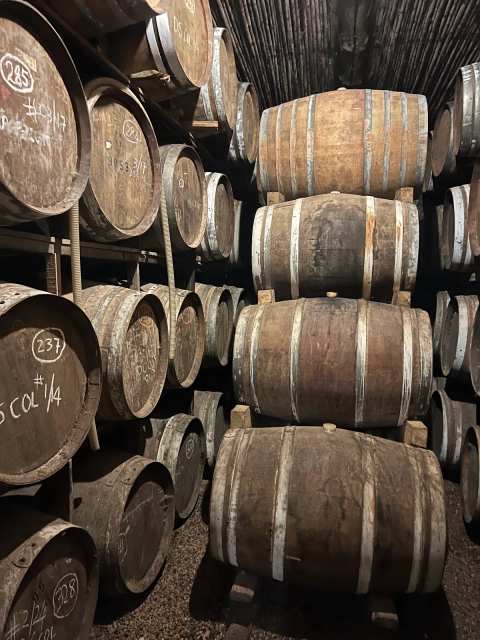
The Association describes the classic method as a second fermentation in the bottle. It says the bottles mature lying down in cool, dark cellars for a minimum of twelve months, and that some members go longer.
From 2023, according to The Buyer, twelve months on the lees is the minimum, up from a nine-month floor. Winewithseth says the rule applies from the 2023 vintage, and twelve is also the Association’s own member standard. Majestic gives the earlier nine months as the legal minimum, and Decanter gives a minimum of nine months and says the Association recommends twelve.
A Wineland article on Cap Classique trends says the vintage Cap Classiques from Bon Courage, a Robertson estate, are each aged for a minimum of 48 months’ yeast contact before disgorgement.
The grapes are mostly the familiar Champagne varieties. According to a wine reference site, the Association strongly encourages Chardonnay, Pinot Noir and Pinot Meunier, and Chenin Blanc is also popular, so a bottle may be made from white grapes, red grapes or a blend.
Why it is not called Champagne
The term Cap Classique exists because the Champagne trade body objected to the word Champenoise, according to the Association, so the Cape makers took a name of their own.
At Colmant in Franschhoek, a house founded by a Belgian family, you can taste Cap Classique in a comparative tasting against imported champagne.
How to read a Cap Classique label
A few terms recur on the bottles. This list covers the ones you will meet at the cellar door.
- Dosage: the sugar added before final corking.
- Dosage range: across the category it typically sits in the range of 6 to 8 grams per litre, according to a wine reference site.
- Brut: one of the sweetness categories, listed beside Brut Nature and Nectar.
- Brut Nature: one of the sweetness categories, listed beside Brut and Nectar, so ask the producer for the dosage. Le Lude lists its Madame Blanc de Blancs 2016 as a Brut Nature Blanc de Blancs.
- Blanc de Blancs: made from white grapes, usually Chardonnay.
- Blanc de Noir: Avondale lists one beside its Blanc de Blanc.
- Rosé: normally made from Pinot Noir. Colmant and Graham Beck both list a Brut Rosé.
- NV and vintage: NV means non-vintage, a blend across years. A vintage bottle comes from a single year, such as the 2016 Vintage Cuvée at Le Lude.
- Nectar: a sweeter category, which Graham Beck lists as Bliss Nectar.
- Extended lees ageing: a longer rest on the spent yeast than the minimum.
Where to taste Cap Classique
The makers below are grouped by area, with straight-line distances between neighbours, so you can pick a cluster for one afternoon. Check each estate’s opening days before you set out, because the hours differ.
Franschhoek: Colmant, Haute Cabrière and Le Lude
Three Cap Classique houses sit close together to the east and south of the village centre. Colmant and Haute Cabrière are 1.3 km apart, Colmant and Le Lude 0.9 km, and Haute Cabrière and Le Lude 0.7 km, so we suggest taking all three in one day, starting at Colmant before it stops pouring at 14:00.
Le Lude makes bottle-fermented sparkling wine and has an Orangerie restaurant on the estate. Its range includes the Vintage Cuvée 2016 and the Madame Blanc de Blancs 2016, and the estate closes on 25 and 26 December and 1 January.
A fuller plan for the valley, with lunch and hotel picks, is laid out in the Franschhoek winelands by distance.
Stellenbosch and Klapmuts: Simonsig, Villiera and neighbours
North of Stellenbosch, several Cap Classique makers sit within five kilometres of Simonsig. Villiera is 4.9 km away, J.C. Le Roux 4.0 km, Quoin Rock 3.9 km and Morgenhof 4.2 km, while Jordan is 11.0 km off.
J.C. Le Roux pairs its sparkling wines with nougat and Turkish delight, according to its restaurants.co.za page, which is undated, so confirm the pairing when you book.
Morgenhof Wine Estate, 4.2 km from Simonsig, lists tastings from Tuesday to Sunday, 11:00 to 16:00, on its tasting page, although its homepage and listing describe daily opening, so call ahead.
Cap Classique is poured at The Cellar Door at Jordan, 11.0 km from Simonsig. Quoin Rock, 3.9 km from Simonsig, describes its sparkling wines as method cap classique; its listing shows daily opening from 11:00 to 18:00.
Tasting fees and booking rules at ten Stellenbosch farms are set out in the Stellenbosch wine tasting guide.
Paarl: Avondale
Other cellars in the Paarl area are covered in the Paarl wine farms guide.
Robertson: Graham Beck, Bon Courage and Van Loveren
Robertson lies about 128 km from central Cape Town in a straight line, measured to Graham Beck. The three estates are in the same valley, with Graham Beck 15.6 km from Bon Courage and Bon Courage 5.1 km from Van Loveren.
Bon Courage makes the Jacques Bruére vintage Cap Classique. Its Vintage Cap Classique and Nougat Pairing costs R140 per person, with three Jacques Bruére wines and three nougats, and a tasting of any five wines costs R50. The tasting room opens Monday to Friday from 09:00 to 17:00 and on Saturday from 09:00 to 15:00.
At Van Loveren the cellar tour includes a glass of Cap Classique, and the tours run on weekdays. Other cellars in the Robertson valley are listed among the Robertson wine farms.
Tasting formats and fees
Cap Classique tastings come in a few formats. The prices below are what the estates’ own sites listed on 6 November 2026, and they can change, so confirm when you book.
- Simonsig: R150 for five wines including Kaapse Vonkel, and R420 per person for the Follow the Vonkel degorging experience.
- Precious Hidden Valley: R160 for a Cap Classique tasting of three wines, and R265 for the chocolate pairing.
- Bon Courage: R140 per person for the vintage Cap Classique and nougat pairing, and R50 for any five wines.
Some estates build the visit around the wine’s making. Simonsig offers a degorging, which is the removal of the yeast sediment from the bottle, and Haute Cabrière features sabrage. Colmant offers comparative tastings against imported champagne.
Pairings are the other common format. Bon Courage pairs its wines with nougat, Precious Hidden Valley with chocolate and Graham Beck with olive oil. The Rickety Bridge listing shows Oysters & Bubbly on Fridays through October and November 2026, which pair shucked oysters with Foundation Stone Cap Classique.
Opening days at a glance
Opening days decide which cluster you can visit on which day. These are the hours as listed by the estates or their listings, checked on 6 November 2026, and each can change with the season, so confirm before you go.
- Colmant: Monday to Saturday, 10:00 to 14:00, and closed on Sundays.
- Precious Hidden Valley: daily, 10:00 to 17:00.
- Quoin Rock: daily, 11:00 to 18:00 according to its listing.
- Graham Beck: Monday to Friday, 09:00 to 17:00, and Saturday and Sunday, 10:00 to 16:00.
- Bon Courage: Monday to Friday, 09:00 to 17:00, and Saturday, 09:00 to 15:00.
- Van Loveren: cellar tours on weekdays.
- Haute Cabrière: the Cellarmaster’s Tour and Tasting on Saturdays at 11:00.
- Le Lude: closed on 25 and 26 December and 1 January.
The pattern is mixed. Graham Beck and Bon Courage both open on Saturday, Graham Beck also opens on Sunday, when Colmant is closed, and Franschhoek’s sabrage tour is a Saturday morning while Colmant stops pouring at 14:00.
Distances from Cape Town
Cape Town is the usual base, so here is how far each cluster sits from the city centre. All are straight-line figures, and the road adds distance, so check the route before you commit to a long day.
- Villiera and J.C. Le Roux: 35.7 km
- Simonsig: 37.5 km
- Avondale: 55.9 km
- Franschhoek village, with Colmant, Haute Cabrière and Le Lude close by: 64.0 km
- Graham Beck in Robertson: 127.8 km
- Bon Courage in Robertson: 142.1 km
Stellenbosch and Klapmuts are the nearest on these figures, at 36 to 38 km, with Franschhoek at 64 km and Robertson at more than 127 km.
How to plan each day
A Franschhoek day on the Cap Classique trail
Start at Colmant by about 12:00, because it pours only until 14:00, then walk or drive the 1.3 km to Haute Cabrière. End at Le Lude, 0.7 km on, where Dineplan lists the Orangerie restaurant as open on Saturdays from 10:00 to 17:00 and from 18:00 to 20:30, so check other days. If it is a Saturday, take the 11:00 tour at Haute Cabrière first and Colmant afterwards.
A Stellenbosch and Klapmuts day
Book the 10:00 degorging at Simonsig, which takes a maximum of 10 guests. Then drive 4.9 km to Villiera for a tasting, or 4.0 km to J.C. Le Roux for a nougat pairing, which you should confirm when you book. Quoin Rock opens at 11:00 and sits 3.9 km from Simonsig, so it also fits before lunch.
A Robertson weekday
Van Loveren runs its cellar tours on weekdays, so choose a weekday. Begin at Graham Beck with the olive oil and Cap Classique pairing, then cover the 15.6 km to Bon Courage for the nougat pairing. Van Loveren is a further 5.1 km on, and its weekday cellar tour includes a glass of Cap Classique.
Questions to ask at the cellar door
A few questions help you compare bottles from different makers. They also show you what the label does not say.
- Is this a non-vintage blend or a single vintage, and how long did it rest on its lees?
- Which grapes went in, and is it a Blanc de Blancs, a Blanc de Noir or a blend?
- What is the dosage, and is the wine Brut, Brut Nature or a sweeter style?
- Is there a pairing, a tour or a degorging that needs booking?
Ask the last question first. Fixed-time experiences such as the Simonsig degorging, which takes a maximum of 10 guests, and the Saturday tour at Haute Cabrière run at set times, so ask about booking.
Which estate for which visitor
Match the estate to the kind of visit you want, then fit the rest around it. The choices below follow what the estates themselves offer.
- For the making of the wine: the Simonsig degorging, the Haute Cabrière cellarmaster’s tour and the Simonsig cellar tour.
- For food with the bubbles: nougat at Bon Courage, chocolate at Precious Hidden Valley, olive oil at Graham Beck and nougat at J.C. Le Roux (confirm when booking).
- For a lighter spend: a tasting of any five wines at Bon Courage costs R50, and five wines at Simonsig including Kaapse Vonkel cost R150.
- For a tasting beyond the glass: the two-hour game drive at Villiera, or the Eco-Wine Safari at Avondale.
- For comparing styles: the comparative tastings against imported champagne at Colmant.
We suggest pairing an estate that explains the wine with one that pours it with food.
The people behind the bottles
Several of these houses are family stories. Colmant is a Belgian family house that arrived in Franschhoek in December 2002. The Haute Cabrière listing describes a family-owned winery on an estate dating to 1694, and Simonsig and Van Loveren both carry family in their names.
The houses covered here include a Belgian-founded cellar in Franschhoek, an old Franschhoek estate that makes the Pierre Jourdan range and a Stellenbosch farm known for Kaapse Vonkel.
Festivals and events
Getaway lists the Franschhoek Cap Classique and Champagne Festival for 5 and 6 December 2026 on the lawns near the Huguenot Monument. Ask about tickets before you plan around it.
Some estates run events on a schedule, such as the Oysters & Bubbly Fridays at Rickety Bridge through November 2026 and the Saturday cellarmaster’s tour at Haute Cabrière, so a listing’s events show what is coming up.
Planning a Cap Classique day
Pick one cluster and stay in it. The Franschhoek trio sits inside 1.3 km, the Stellenbosch and Klapmuts group spreads over about five kilometres and, we suggest, needs a car or a guided tour, and we suggest giving Robertson a full day.
The driver should not drink, so use a driver, a guided tour or a taxi between estates. Book the experiences that have a fixed time, such as the Simonsig degorging.
The Western Cape wine farms guide puts Franschhoek, Stellenbosch, Paarl and Robertson side by side for a trip wider than one cluster.
Frequently asked questions
Published October 26, 2026