A working print shop, a 1.5 million piece type collection and what to know before you go.
Nobody expects a converted factory on 10th Street to hold 1.5 million wooden letters, but the Hamilton Wood Type Museum in Two Rivers does, and it still prints with them. The museum calls itself the only one dedicated to the preservation, study, production and printing of wood type.
This guide covers how a visit works, where the type came from, what is on the floor, and where to go afterward in downtown Two Rivers. If you are planning more than one stop, start with the things to do in Two Rivers.
Sponsored
Hamilton Wood Type Museum hours, admission and getting in
The museum is at 1816 10th Street and opens Wednesday through Saturday from 10 AM to 4 PM, according to its own visit page. General admission is $10, seniors 65 and over, veterans and children 6 to 12 pay $5, and children 5 and under are free. Treat those as the museum's posted terms and confirm them before you set out.
The same page lists closures on November 11, November 25 and 26, and December 24, 25 and 31. Self-guided visits are allowed any time during opening hours, and guided tours come from museum affiliates. A February 2026 Milwaukee Magazine visit described volunteer-led tours that run one to three hours.
Look for the building at 10th and Madison, along Highway 42. The museum says every public area and entrance is wheelchair accessible, and its Google profile also lists accessible parking and an accessible restroom.
Neither the museum's visit page nor its Google profile describes a visitor lot beyond that accessible parking, so call before bringing a bus. Groups of 15 or more need to book three weeks ahead for Tuesday-through-Saturday tours, and the museum's number is (920) 794-6272.
A scroll saw, a rush order and the largest wood type maker in the country
Wood type in Two Rivers began with one furniture maker and one deadline. In Milwaukee Magazine's telling, newspaper editor William Nash needed posters for a ball and could not wait for type from Chicago, so he asked ornamental-furniture maker Edward Hamilton to cut letters, which Hamilton did with a scroll saw on his mother's back porch.
The museum's own history dates the company to 1880 and says it became the largest wood type maker in the United States within about 20 years. The Wisconsin Historical Society records the business as incorporated in 1889 under Hamilton's name. Accounts of the first year differ, with Atlas Obscura placing the first custom set in 1868 and the museum's history putting the first decorative type in 1878.
Around 1917 the firm turned to steel for its furnishings, and Hamilton went on to build dental cabinets and an early clothes dryer alongside the letterpress cabinets. According to the museum's history page, the company still exists as a maker of laboratory furniture.
What the floor of the Hamilton Wood Type Museum holds
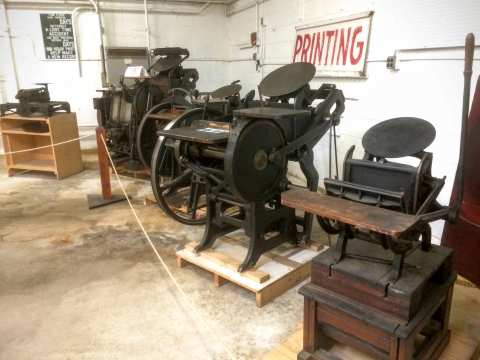
The floor is a working print shop wrapped around a type collection of about 1.5 million pieces in more than 1,000 styles. Leave room in the schedule, because the presses reward slow looking.
Milwaukee Magazine says the presses are laid out in the order of the production process, from a planer that cuts the wood to a trimming station that sharpens letter angles. It adds that posters for causes and beliefs were printed on these presses in wartime. Hamilton also made the Lushootseed typeface for the Tulalip Tribe of Washington State so the tribe's language could be written down.
Atlas Obscura describes a 145-foot wall of type. Wood type was often cut from hard maple, and the museum's assistant director told a 2016 writer that the building still smells like wood, ink and mineral spirits.
An August 2026 reviewer on Google praised the gift shop's retro and modern designs printed on decades-old equipment, then the several thousand square feet of presses and live demonstrations beyond it. In the shop you can buy a print or newly cut type.
The current exhibit, Set In Type, runs through December 2026, uses the history of Hamilton Manufacturing to show how print shaped civic life, and was hand-printed by staff and volunteers on historic presses. A July 2026 reviewer singled out the prints made for the America 250 theme.
Printing something yourself
The museum's home page lists one-day Learn To Print events from 10 AM to 4 PM on November 21 and December 5, 2026, where you print on a historic press with an instructor. Public workshops go on the museum's calendar, and private full-day workshops for six to ten people need four weeks' notice.
The Wayzgoose, the museum's type conference, did not run in 2025, because the board canceled it in a September 9, 2025 notice. A 2016 article notes that a wayzgoose was historically an end-of-summer feast for printing employees. That notice announces nothing for 2026, so ask the museum before planning a trip around one. The July 2026 reviewer wished they had come on a class day, so check the calendar before you go.
The 2013 move and the film that put it on screen
The museum opened in 1999 and was told in fall 2012 to leave its original factory space. It reopened on November 13, 2013 in a former Formrite Company building with twice the space, after almost a year closed. Volunteers and supporters raised $400,000 to buy that building, and 27 semi-trailer loads of artifacts made the trip. The original building was demolished in 2015.
Typeface, a 63-minute documentary directed by Justine Nagan and released in 2009, centers on the museum and won Best Documentary at the Flyway Film Festival that October.
Making a day of it downtown
Two Rivers keeps a maritime museum and a claimed birthplace of the ice cream sundae within about a mile of the museum, measured in straight lines.
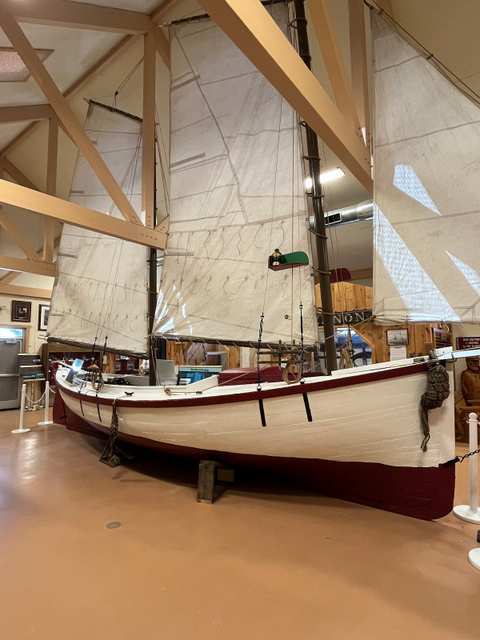
The village's site lists regular hours May through October, while Google shows a full weekly schedule, so call (920) 793-5905 before a winter visit. A June 2026 reviewer praised the guided tug and lighthouse stops.
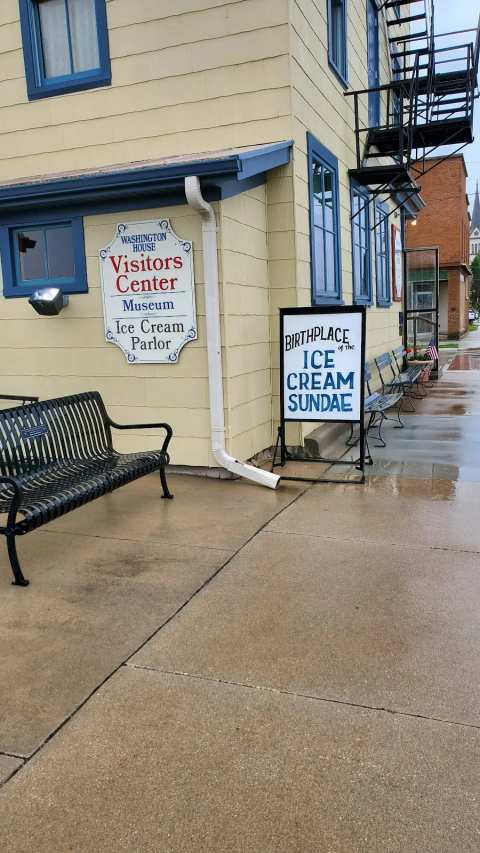
Two Rivers dates the sundae to 1881, when George Hallauer asked soda fountain owner Ed Berners to top ice cream with chocolate sauce, then used only for sodas. Berners first sold it for 5 cents on Sundays, and Ithaca, New York, claims its own 1892 invention. The Washington House itself is a three-story immigrant hotel built in 1850.
The museum side, run by the Two Rivers Historical Society, showed as temporarily closed on Google on November 8, 2026, so call (920) 793-2490 before counting on the ballroom murals and 1930s rooms. A June 2026 reviewer who walked over from Neshota Beach called the ice cream delicious.
To stay close, the Lighthouse Inn on Lake Michigan at 1515 Memorial Dr is about 0.2 miles from the museum and describes direct beach access. Compare other places to stay before you book.
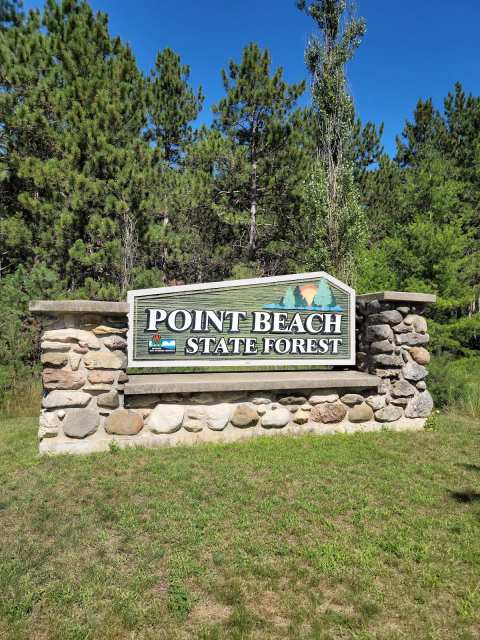
Point Beach State Forest lies about 3.6 miles northeast in a straight line, which makes a day in Point Beach State Forest an easy partner for a museum morning.
The shop on 10th Street still sells a print or newly cut type, so the 1.5 million wooden letters on its shelves are a collection that keeps working.
Frequently asked questions
Published September 21, 2026