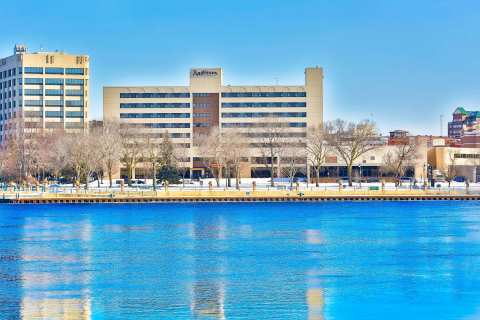
A riverfront lawn, a marsh, an island beach and a forested bluff, all within about 3.3 miles of Riverside Park.
The parks in La Crosse read like a short tour of the city's geography: a riverfront lawn, a marsh, an island and a forested bluff, all within about 3.3 miles of Riverside Park. The planner John Nolen designed Riverside Park, dedicated in 1911, and Myrick Park dates to 1903.
The city lists parks as open daily from 6 a.m. to 11 p.m., dogs must be on a leash on city trails, and camping, fires and smoking are prohibited. The city counts more than 70 miles of paved and natural surface trails across its parks.
Riverside Park, the downtown lawn
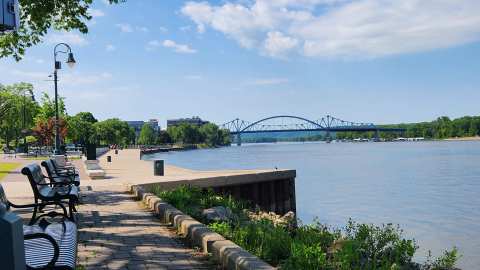
Riverside Park, at 100 State Street, sits where the Mississippi, Black and La Crosse rivers meet, and the city dedicated it in 1911 on land made from dredged river material. The Wendell Anderson bandstand dates to 1930, the International Friendship Gardens fill the north end, and Riverfest has marked the Fourth of July here since 1983. In winter the same lawns carry Rotary Lights, which organizers first considered placing in Myrick Park or Pettibone Park before settling on Riverside.
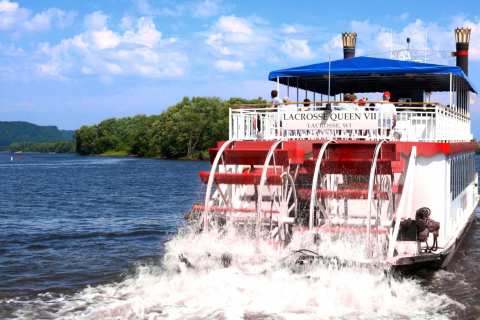
Reviewers mention paved paths, gardens along the river and the chance to see a riverboat near the eagle statue. One winter visitor says to bundle up because the river wind bites. The Rotary Lights run from late November through December 31 in 2026 and are free, and you can plan the rest of a visit around the other La Crosse attractions.
The park also has an ice rink, and steamboats dock at the central levee in some seasons. Pettibone Park is about 0.5 miles away if you want a beach after the lawns.
Myrick Park and the La Crosse River marsh
Myrick Park, at 2107 La Crosse Street, was established in 1903 and is named for Nathan Myrick, who founded Prairie La Crosse in 1841.
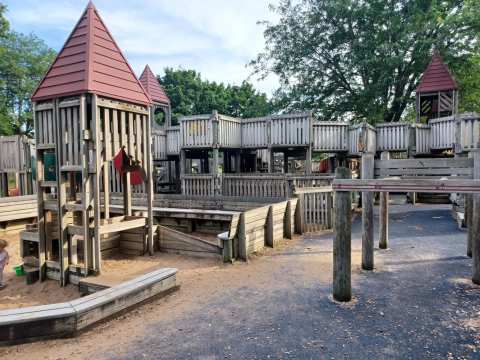
The Kids Coulee wooden playscape went up in 1994 with about 3,700 volunteers, after the Rotary Club raised $278,000 for materials, and it was updated in early 2024. The park also has a dog park, an amphitheater, sledding and canoe and kayak access, and it borders a marsh of 1,077 acres. The Myrick Park Zoo, which opened in 1929, closed in 2007, so the animals are gone but the setting remains.
Reviewers mention cheap bike rentals, free wildlife viewers and a marsh loop with paved and unpaved sections. One suggests bringing binoculars, and another says portable toilets stand in when the park restrooms are closed. It is about 1.5 miles from Riverside Park.
The marsh is the reason to linger, because Travel Wisconsin lists great egrets, green-backed herons, rails and wrens, and a 1999 breeding bird survey that compared Myrick Marsh with Hixon Forest recorded 124 species across the two sites. The Myrick Park Center at 789 Myrick Park Drive is run by WisCorps, and bunny trails lead from the park toward the Hixon Forest trails.
Pettibone Park, the island beach
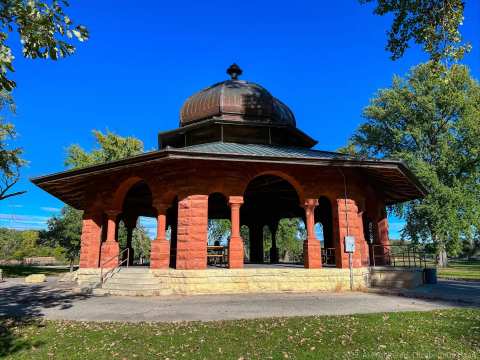
Pettibone Park, at 101 Pettibone Drive South, covers 230 acres on what was once Barron Island, and Albert Wells Pettibone bought the land in 1901. The sandy river beach has a bathhouse first built in 1903 and replaced in 1926, a sandstone gazebo from 1902 still stands, and a 27-hole disc golf course circles the park. The island belonged to Minnesota until 1918, when an act of Congress moved it to Wisconsin, and La Crosse annexed it in 1919.
Reviewers mention a free parking lot, kayak and bicycle rentals, a boat club at the south end and portable toilets, and they recommend mosquito spray. The canoe and kayak launch is one way to get onto the river without a boat of your own. Bring a picnic, because there is space for one.
Hixon Forest and Upper Hixon Forest
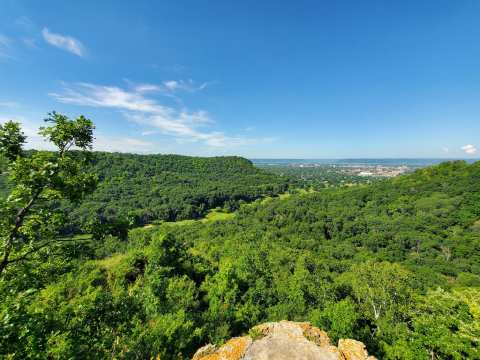
The bluffs belong to the Hixon family's gift, because Hixon Forest grew from land donated in 1912 below Grandad Bluff, and the Hixons bought the bluff itself in 1909. Grandad Bluff itself is about 0.7 miles from the lower forest.
Travel Wisconsin gives 800 Milson Court for Hixon Forest, which has about 10 miles of hiking and multi-use trails, four parking areas and four vistas besides Grandad Bluff, and entry is free. Bicentennial trails were dedicated here in October 1976, and mountain bikes were banned from the Hixon trails in 2001 before a dedicated bike trail opened in 2002.
Reviewers mention easy to intermediate trails, steady views of the bluffs and the city, portable toilets, mosquitoes in warm months and a climb that is rough for small children. The city sorts the forest into Lower Hixon, which has a standard map and a separate winter map, and Upper Hixon, on County Highway FA. It is about 2.7 miles from Riverside Park.
Upper Hixon Forest is the newer, bike-minded half, where a 2019 mountain bike group write-up describes machine-built flow trails. It lies about 0.6 miles from the lower forest.
Reviewers mention a free parking lot, riders who use timber bells near hikers, and the Hixon50 trail race each October. One local arts blog lists named routes including the 2.5-mile Rotary Vista Trail, the 2.2-mile Hickory Trail for hikers only, the 3-mile Bicentennial Trail and the 2.1-mile Oak Trail. Trail mileage varies between sources, so use the city maps on the day.
Trail manners and conditions
The city's trail page, checked on October 28, 2026, listed no closures and asks trail users to yield to uphill traffic. Mountain bikers and hikers share the forest, so watch for a timber bell and step aside, and wear clothes you do not mind muddying after rain. The city's trail page lists the lower forest at 2600 Old Quarry Road and the upper forest at 709 County Road FA, so check the trailhead on the city map before you drive up.
Which park for which day
Families with small children will like Myrick Park, where the playground, the marsh loop and the paths toward Hixon Forest sit together. A beach and a picnic suit Pettibone Park, while Riverside suits a stroll that ends at one of the downtown restaurants within a short walk. Hikers and riders should go straight to the forest, starting at Hixon Forest and crossing County Highway FA to Upper Hixon when they want more. Riders can also leave Myrick Park for the state trail system, which runs north toward Trempealeau and east toward Reedsburg.
A marsh, an island, a riverfront lawn and a forested bluff all sit within about 3.3 miles of Riverside Park, so one town covers four kinds of outdoors.